Ljubljana and its surroundings: Kamnik, Velika planina and the Ljubljana Marsh
A day in Ljubljana likes to begin with coffee by the Ljubljanica, continue at the market under the arcades and end on the castle tower, from which you can see how close the hills are to the city. It is precisely this closeness that is the main feature of this part of Slovenia.
North of the city rise the Kamnik–Savinja Alps with the pastoral Velika planina, to the south lies the marshy Ljubljana Marsh, and to the west the plain quickly turns into hills. You reach each of these worlds from the centre in a good half-hour, so you can devote one day to the city and the next to the mountains.
The area that the tourist map calls central Slovenia is therefore rewarding for a single overnight address. If you stay several days, choose Ljubljana or a place in its surroundings as your base, and get to know the surrounding valleys as day trips.
Ljubljana: a town beneath the castle
Ljubljana is small enough to walk across and lively enough that you run out of time for a single visit. The old town by the river is closed to traffic, so start at the market and slowly walk up to the Križanke.
In Ljubljana Castle you can climb up on foot by the castle hill or ride up by funicular from the old town. From the observation tower, in clear weather, you can see the Kamnik–Savinja Alps, the Julian Alps and the Marsh, in other words all three directions of the trips we describe below.
The town core is to a large extent the work of Jože Plečnik. His arrangements from the Triple Bridge and the market to the Križanke were inscribed on the UNESCO World Heritage list in 2021. For the background, visit Plečnik House in Trnovo, where the architect lived and worked.
For a break between sights, the nearest is Tivoli Park, which merges to the west with wooded Rožnik. The path to the top is gentle, so you can walk it with children too, and the locals like to set off up it before breakfast or after work.
Kamnik and Velika planina
Kamnik is a good half-hour from the capital. Set aside an hour for the medieval core below Mali Grad, though most visitors stop here only in passing, on the way towards the mountains above the town.
Velika planina is a high mountain plateau with a herders' settlement of round wooden huts, where shepherds still work in summer. From the Kamniška Bistrica valley a cable car and a chairlift run up to the pasture, and you should check the timetable and prices before setting off on the official website of the cable car, as they change between seasons.
The Kamniška Bistrica valley is a destination in its own right too. A short and gentle path leads to the source of the river, which you can walk even with younger children. If the heat in the basin bothers you in summer, head right here, as it is noticeably cooler by the riverbed than in the town.
Between Kamnik and Domžale lies Volčji Potok Arboretum, a park with avenues, a lake and a spring flower show that draws the most visitors of the year. If you travel in May, you can see the show in a single afternoon. In the Tuhinj Valley above Kamnik there are Snovik Thermal Spa, which you can reach from Ljubljana in less than an hour.
The Ljubljana Marshes and Vrhnika
South of the city opens a plain that was once a lake. On the Ljubljana Marsh the remains of pile-dwelling settlements were discovered, inscribed on the UNESCO list since 2011, and a wooden wheel with an axle, the oldest so far found in the world. The wheel is on display in the City Museum of Ljubljana.
The Marsh is flat and criss-crossed with cart tracks, so for sightseeing rent a bike rather than take a car. The paths lead through Brezovica pri Ljubljani, Ig and Borovnica, and in spring and autumn migratory birds stop on the wet meadows.
On the western edge of the marshes is Vrhnika, the starting point of the path along the Ljubljanica and the birthplace of the writer Ivan Cankar. A few kilometres on is Bistra, where a technical museum with collections of vehicles, forestry and printing is housed in a former Carthusian monastery. You can easily combine the visit with a walk by the water in front of the museum.
Along the Sava and in the hills above the town
Domžale and Medvode are suburban centres that visitors usually overlook, although they are good starting points for cyclists. At Medvode the Sora flows into the Sava, and above the dam lies Lake Zbilje, around which you can walk along a laid-out path by the water.
Above the northern edge of the town stands Šmarna gora, a popular excursion peak with an inn and a view of the Kamnik-Savinja Alps. West of it begins the hilly country with Polhov Gradec, where there are fewer people and more forest paths.
To the east, above the Sava valley, stands Bogenšperk Castle near Litija, where Janez Vajkard Valvasor prepared The Glory of the Duchy of Carniola. South of the town the landscape, across Grosuplje gradually opens up towards Lower Carniola.
Where to go on a trip from Ljubljana
From the capital, most Slovenian regions are less than two hours' drive away, so many a visit gains a day trip as well. If you have a free day left, choose among the following four directions.
Škofja Loka has a preserved medieval core below Loka Castle and is half an hour from the town. For crafts and town history, this is the easiest trip on this list.
Idrija is a former mining town whose mercury heritage is inscribed on the UNESCO list, and whose surroundings are protected as a geopark. It is also known for hand-made bobbin Idrija lace and for žlikrofi, which you can try right in the town. For a visit to the mine take half a day, and the neighbouring Cerkno is a base for skiing and for visiting the Franja Partisan Hospital.
In the south begins Kočevsko with the most extensive forests in the country and remnants of primeval forest. Bears are at home here, but you can watch them only in the company of a guide, so arrange a slot in advance. An hour's drive on lies White Carniola with the Kolpa, Črnomelj and Metlika.
What to do outside the city?
The strongest activity of this area is cycling. For family trips choose the plain in the south, for road cycling and the hills to the west, where the climbs are long and the distances between them short.
Next comes culture and history, which is to be expected in a region of castles, monasteries and the capital. In winter you can choose among winter activities, from the smaller ski resorts above Kamnik and in Cerkno to the ice rinks in the towns.
Where to go with children?
For families choose destinations where you can walk and look at the same time. The Arboretum is gentle and well laid out, the herders' huts on Velika planina are understandable to children without explanation, and the Technical Museum in Bistra you should save for a rainy day.
In Ljubljana, besides Ljubljana Zoo, try the funicular to the castle and a boat trip on the Ljubljanica, as both are short enough for children to manage. For swimming you can head to Terme Snovik or to the city bathing areas.
What and where to eat?
The cuisine of this area is a mix of urban and rural. In inns are at home soups, obara, štruklji and grilled dishes, while restaurants in the capital closer to modern European cuisine.
For a quick meal between visits, stop at one of the pizzerias, and for a sweet break, in patisserie. If you are interested in wine, you can visit wine cellars in the hills east of the city.
Where to stay?
Choose accommodation according to what you will be doing. Hotels and hostels are gathered in Ljubljana and make sense if the focus of the visit is the city and you are interested in the evening programme.
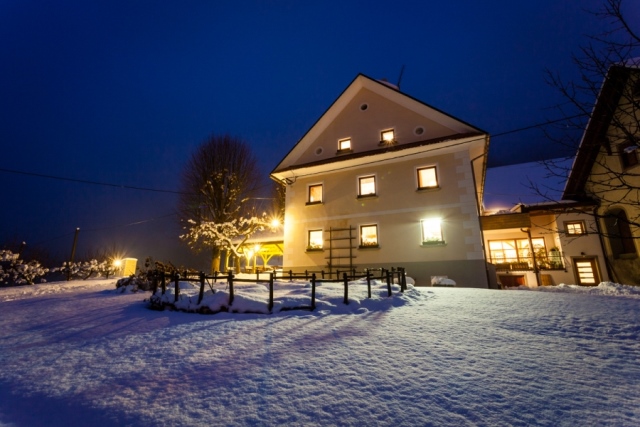
Apartments and private rooms are scattered across the suburban places, where parking is as a rule easier, and you reach the centre in half an hour. If you are looking for peace and home cooking, look at farm stays in the hills, and for a stay under a tent roof or in glamping campsites.
When to visit
The town is year-round, while the surroundings have clear seasons. In spring reckon on the blossom in the Arboretum and the first trips to the Marsh, in summer on the mountain-pasture season on Velika planina and the heat in the basin, and in autumn on quiet cycling and chestnuts in the hills.
In winter the crowds in Ljubljana move into covered spaces and to the December fairs, while the hills above the city are often above the fog. It is precisely this difference that makes a visit worthwhile outside the main season too: if it is grey in the basin, drive half an hour higher, where you will as a rule find sun.



![[/]Razpotnik Patisserie - birthday cakes, wedding cakes](https://sloveniaholidays.com/wp-content/uploads/media/restaurants/gallery/gallery-img_20171216_111748-scaled.jpg)