Ptuj: the oldest Slovenian town with a castle above the Drava
Ptuj is considered the oldest Slovenian town, as on this spot by the Drava stood the Roman Poetovio, an important stronghold on the way towards Pannonia. Traces of it are still visible, from the tombstones on the squares to the collections in the museum, and thanks to its position on a terrace above the river the town has kept a compact appearance.
For a visitor Ptuj is rewarding because it is small and dense at the same time, so you can visit all the main points without a plan. You walk across the old core in an hour, and the castle above it is close enough to climb up to on foot and return to the town for lunch.
Ptuj Castle and the museum
The castle stands on a hill above the town and is the most recognisable image of Ptuj, while inside is The Regional Museum with collections of furniture, musical instruments and traditional carnival masks. It is the mask collection that best explains why the carnival is so important in this town, so set aside more time for it than for the other collections.
You can climb up to the castle by the steeper footpath from the old core or drive up by the gentler road from the other side of the hill. From the castle courtyard a view opens over the roofs of the town, the Drava and the Haloze rising on the other side of the river.
The old town centre
The old core stretches between Slovenski trg with the town tower and Ormoška cesta, and along it stand burgher houses with Gothic and Baroque portals. On Slovenski trg stands the Orpheus Monument, a Roman tombstone that later served as a pillory.
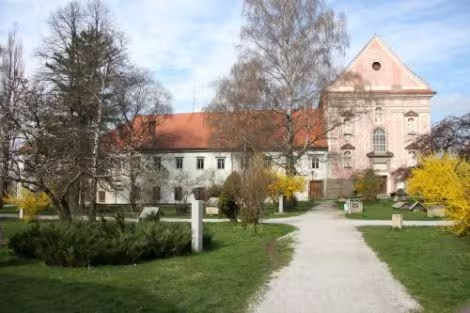
In the old town also see a Dominican monastery, where you can visit exhibitions and events. The town is small enough that you can see all three, the castle, the monastery and the square, in a single morning.
Kurentovanje and the carnival heritage
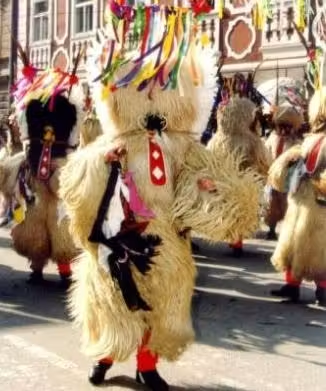
Ptuj is best known for Kurentovanje, which has taken place every winter since 1960 and is the largest carnival in the country. The Kurent, with his sheepskin, bells and long tongue, has become the symbol of the town, which you will see outside the carnival season too.
If you come to the town in another part of the year, the Kurent heritage you can view in the museum collections. It is these that explain that these are processions older than the carnival itself.
Wine, Haloze and spas
Ptuj is the centre of one of the oldest wine-growing areas in the country, and beneath the town there is a wine cellar that also keeps archive vintages. On the other side of the Drava rise the Haloze, with narrow ridges and steep vineyards, where the roads are demanding but the views the best in the area.
North of the town is Ptuj Lake, and beside it a thermal offer that makes many people opt for a longer stay. Thanks to the combination of wine, town and water, Ptuj works as a base too, not just as a one-day destination.
Ptujska Gora and the surroundings
Just under twenty kilometres to the southwest stands Ptujska Gora, a pilgrimage church considered one of the peaks of Gothic in the country. Its stone relief with the Virgin of the Protective Cloak is considered one of the peaks of Gothic sculpture in the country.
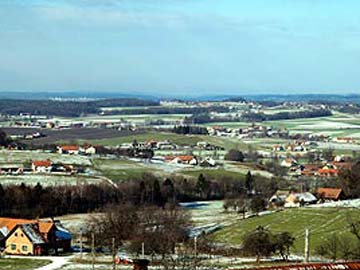
The surroundings are otherwise flat and agricultural, with villages along the road and a view of Pohorje rising to the north. It is a landscape most easily explored by bike, as the distances are short, there are almost no climbs, and the roads between the villages are empty.
What to do in Ptuj?
The basis of a visit is the castle, the old core and the wine cellar, which most people link into one day. For a longer stay you can add cycling across the plain or a drive into Haloze, where the landscape changes completely.
In winter the town is at its liveliest during the carnival season, otherwise the programme stays in the museums, cellars and spas. You will find an overview of the offer among experiences in Ptuj.
Ptuj with children
For families the most rewarding are the carnival masks in the castle, because they are understandable to children without explanation and stay in the memory. The climb to the castle is short and manageable even for the younger ones, and at the top a courtyard awaits them, where they can stretch their legs.
The summer part of the day is most easily handled by Ptuj Lake or in the spa, where the pools are meant for the youngest too. In the rain, the museum collections remain, all of them under cover.
Ptuj for two
For two, the combination of the town and wine works well: the old core and the castle in the morning, and a cellar or the wine road in Haloze in the afternoon. In the evening the town is quiet, which you can count as an advantage if crowds put you off.
For the view climb to the castle courtyard towards evening, when the sun lights up the roofs and the river below them.
What and where to eat in Ptuj?
Styrian cuisine is hearty: dishes with pumpkin seed oil, sour soup, cured meats and gibanica. Among the local specialities is the Ptuj onion, an onion with a protected name, which you can buy at the market and taste in the dishes.
The offer is concentrated in the old core and by the castle, while a few farms and cellars lie in the surrounding vineyards. You will find an overview among the culinary offer.
Where to stay in Ptuj?
For sightseeing choose accommodation in the core, because you will walk everywhere. For a longer stay with children, more practical is accommodation by the spa north of the town.
Available are accommodation of various types, whereby the choice in the core itself is limited. For larger events, especially in the carnival season, arrange accommodation well in advance.
Where to go on a trip from Ptuj?
The nearest are Ptujska Gora with its Gothic church and Haloze with wine roads, both within half an hour. To the north is Maribor with the Pohorje, which is just under half an hour away.
To the east Prlekija opens up with Moravske Toplice and Prekmurje, where the landscape flattens out. A broader overview of the destination you will find under Thermal Pannonian Slovenia.