Rateče and Planica: the valley of ski jumps below the Ponce
Rateče is the last village in the Upper Sava Valley, where the road forks towards Italy and Austria. Above the village rises the ridge of the Ponce, and below it lies Planica, the valley that made Slovenia famous for ski flying. If you are looking for a place where you are close to the sporting action and yet in quiet surroundings, Rateče is a choice worth considering.
Why Rateče and not Kranjska Gora
Kranjska Gora is only a few minutes away and has more on offer, while Rateče is quieter, and yet you keep access to the same ski slopes and trails. The village is small, has kept its Upper Carniolan houses and has not sprawled into a tourist settlement, so you can stay here even in high season, when the beds in the centre of the valley are taken. For a visitor this means closeness to Planica, Zelenci and the Italian border without a long drive.
What Planica is
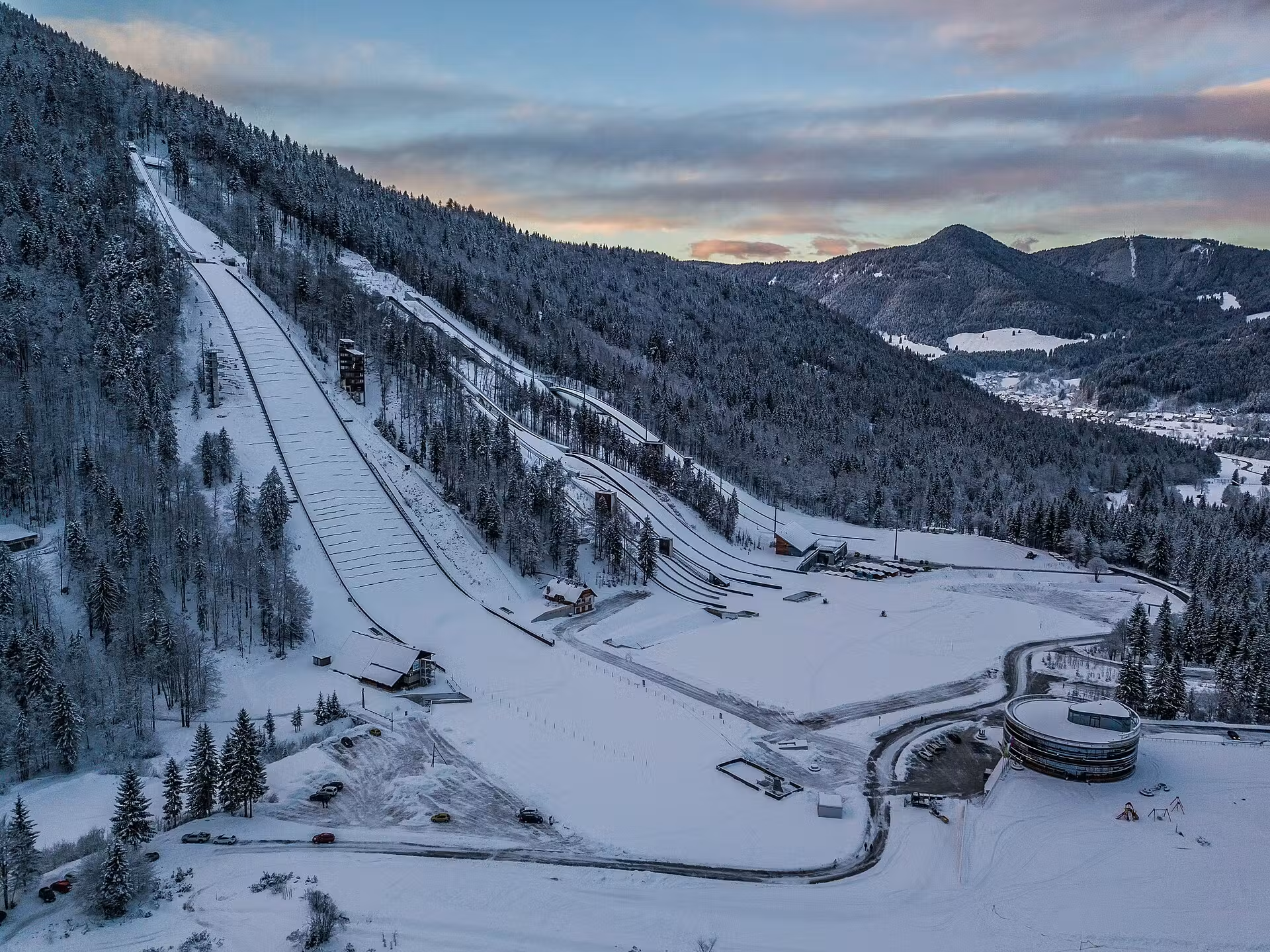
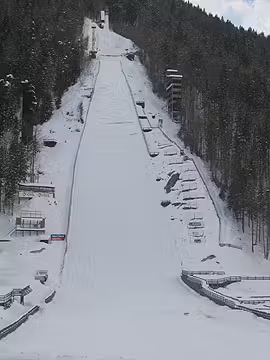
Planica is a valley with a complex of ski jumps, among which the Gorišek Brothers ski-flying hill stands out, with the large hill and the medium and children's facilities beside it. In the same valley also stood the Bloudek Giant, on which world records for the length of jumps were once set. Today Planica is arranged as a sports centre that operates all year, so you can visit it outside the competition season too, and the offer and access are described on the official website of the centre.
Zelenci and the Tamar Valley
Between Rateče and Podkoren lies the nature reserve Zelenci, where the source of the Sava Dolinka is. The water there is unusually clear and has a green-blue colour, and a flat path suitable for pushchairs leads to the viewing platform. Beyond Planica the valley continues towards Tamar, a mountain valley below Jalovec, which you can reach on foot by a gentle path, and both points are short enough to link in one afternoon.
What to do here in winter
Rateče and Planica are in Slovenia most associated with cross-country skiing, because the valley allows long and gentle trails. On the portal you will find an offering for cross-country skiing and the entire the winter offer in Rateče and Planica. For alpine skiing you drive to Kranjska Gora, which is a few minutes away, and the conditions depend on the snow.
What to do here in summer
In summer the valley turns into a starting point for hiking and cycling, because a long-distance cycling route towards Italy also runs through it. You can reach Tamar with the family, while for more demanding destinations the Ponce, Jalovec and the paths towards Vršič open up. Cyclists appreciate that the valley is gentle and can be followed without big climbs. View the whole offer among the experiences in Rateče and Planica.
What and where to eat
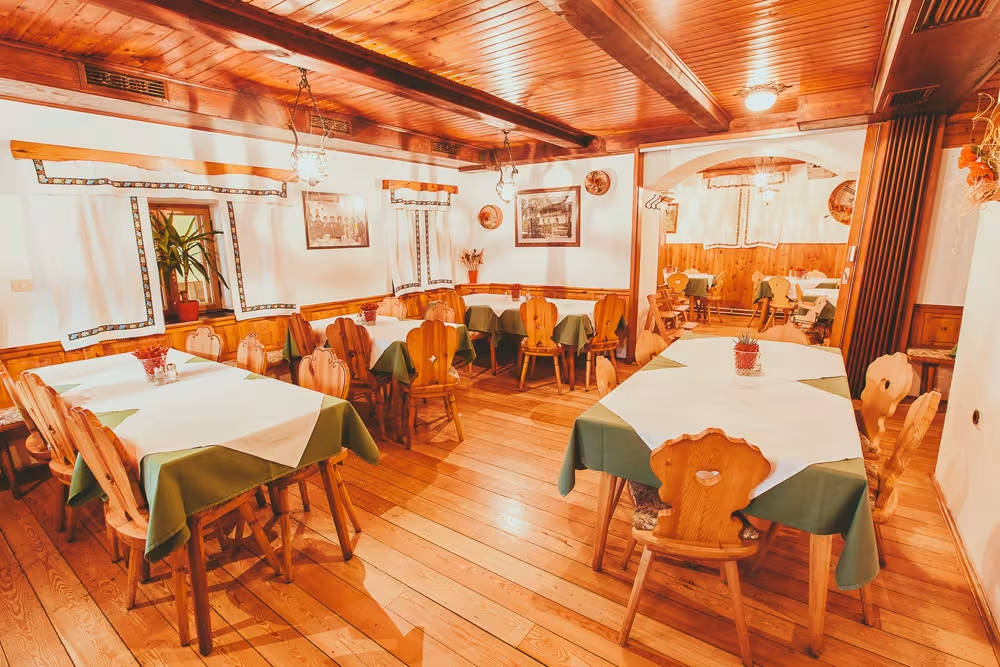
The offer in the village is small and homely, so expect Upper Carniolan dishes, žganci, sausages and one-pot stews that you eat in the hills after a hike. For a wider choice you drive to Kranjska Gora, where the restaurants and inns are open in winter too. In the mountain lodges above the valley the offer is simpler, but the way to them is part of the experience. At the weekend it pays to call the smaller inns in advance.
Where to go on a day trip
Rateče is a gateway to three countries, which is unusual by Slovenian standards. To the west you come to Italy as far as Tarvisio, to the north the road turns into Austria, and to the east the valley descends past Kranjska Gora do Bled. If you are planning several days in the mountains, take a look at the whole destination Julian Alps. For a day without a car, choose a cycling route along the valley.
Where to stay
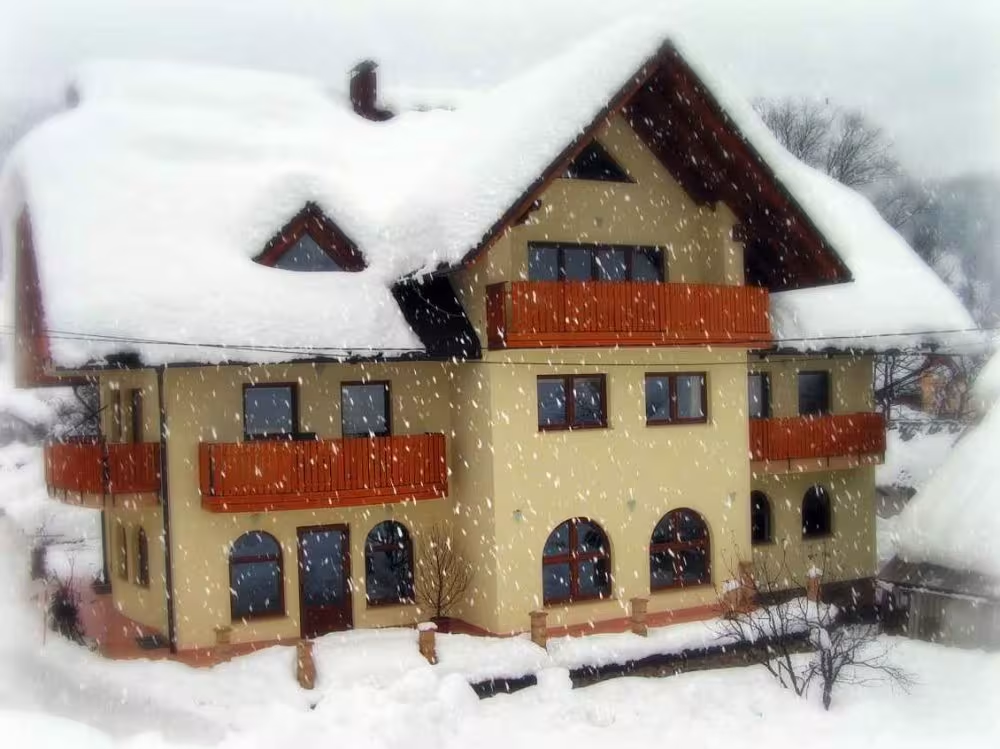
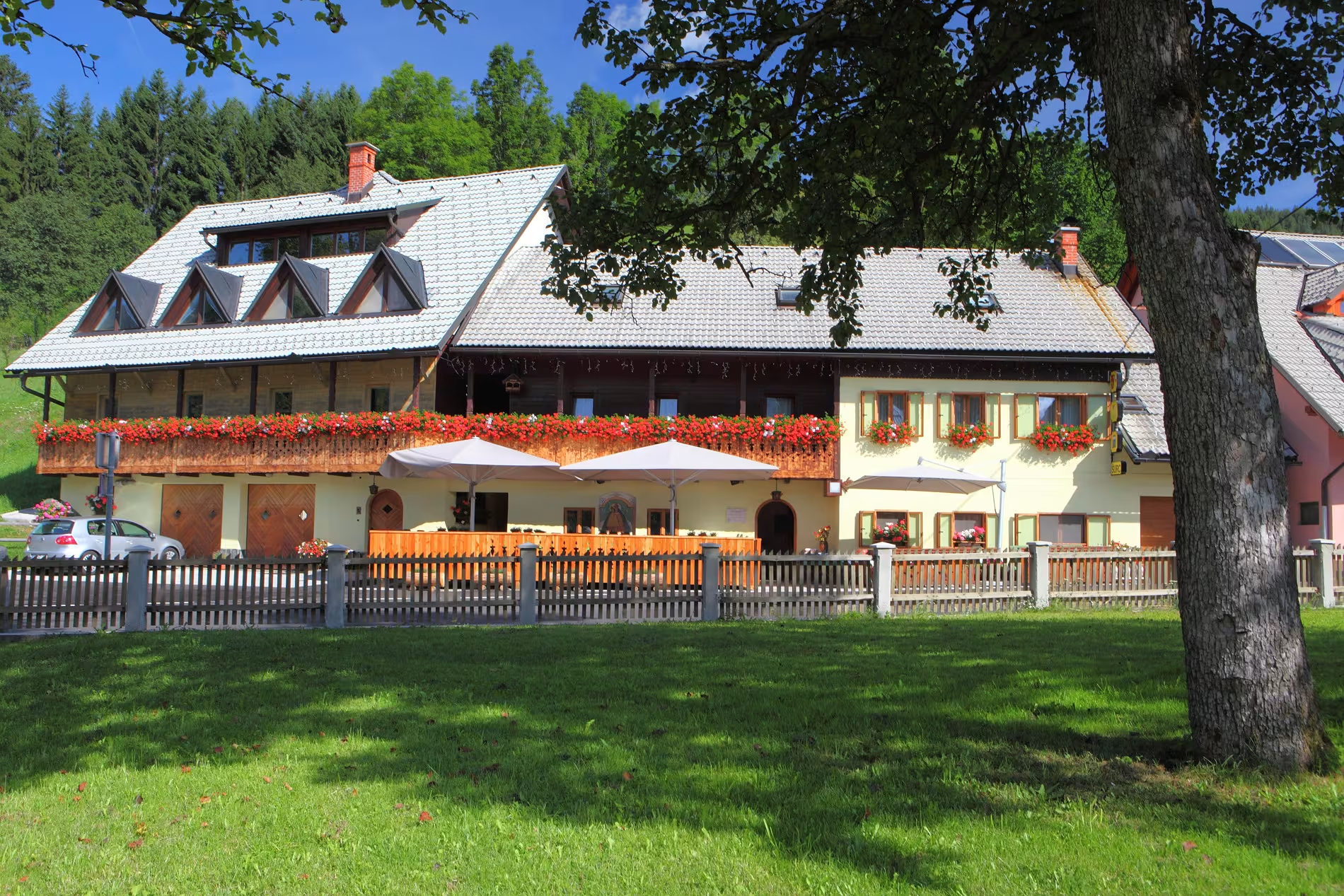
The offer in Rateče is mostly private and more scattered than in the centre of the valley. You can choose among private rooms, apartments, villa and lodgings by the ski slopes. For winter, accommodation with space for equipment makes sense, and for summer a location close to a cycling route.
When to come
In winter the valley is given over to snow, so expect cold mornings and short days, but at the same time the best conditions for cross-country skiing. Late spring is the calmest time, when the paths are already clear and there are few visitors. In summer the valley is pleasantly cooler than the lowlands, which is an advantage in the hot weeks. Autumn brings clear views of the Ponce and the fewest crowds of the whole year.