Spas in the east of Slovenia: Styria, Prekmurje and Posavje
The east of Slovenia is a land of healing waters. The thermal springs line up from the plain along the Mura through Kozjansko and Posavje to Lower Carniola, and among them lie wine-growing hills, castles and farms, where the day often ends at the family table.
The spa is the best-known reason to visit, but not the only one. In the same day you can fit swimming, a castle visit and lunch in the wine hills, as the distances between them are short and the landscape changes every few kilometres.
The area that the tourist map calls Thermal Pannonian Slovenia is broad, and the distances are large by Slovenian standards. Choose one base and get to know the neighbouring places as day trips, so that you spend more time at the destination than on the road.
Prekmurje and Pomurje: Moravske Toplice, Radenci and Goričko
The plain along the Mura is the most Pannonian part of Slovenia. The fields stretch to the horizon, the villages are strung along the roads, and in summer storks circle above them. Murska Sobota is the supply centre of the region, and the most spa offer is in Moravske Toplice and Radenci.
North of the plain rises Goričko, a hilly country with scattered hamlets and orchards. Grad stands on a hill of basalt tuff and has an extensive pentagonal Baroque layout with arcaded corridors. In Bogojina you can see the church redesigned by Jože Plečnik, and near Dobrovnik you can visit Lake Bukovnica with well-kept paths around the water.
In the far east is Lendava. Climb to the viewing platform of the Vinarium tower, 42 metres above the ground, from where a view opens across the plain and the border wine hills. If you are interested in how far the Pannonian world reaches, this is the quickest way to see it.
Ptuj and the wine hills
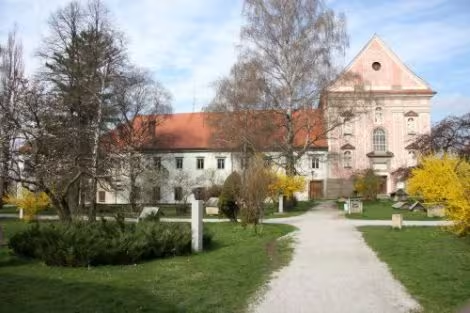
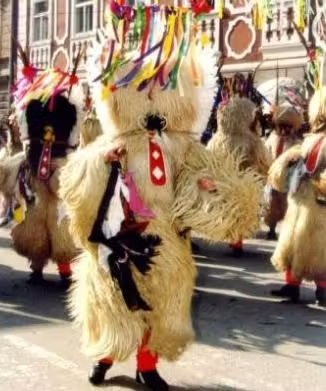
Ptuj in Roman times was Poetovio, the largest Roman settlement on present-day Slovenian territory. Above the town stands a castle, and in the old core you can see a Dominican monastery and The Ptuj and Ormož Regional Museum. The town is also known for Kurentovanje, its carnival.
South of the town, on a hill, rises Ptujska Gora with a pilgrimage church, and to the east the wine hills open up. The wine road leads across Jeruzalem above Ljutomer and Ormož, where šipon wine is at home.
For a visit as a couple, this part is rewarding, because the tasting, the view over the wine hills and lunch naturally come together into one afternoon. The wine roads are marked, so you can drive them in shorter sections too.
Podčetrtek, Olimje and Rogaška Slatina
Podčetrtek is the spa centre of Kozjansko, and a few minutes away is Olimje, a Minorite monastery in the former manor of the Counts Attems. On the ground floor of the southern tower, take a look at the old monastery pharmacy with frescoes, a legacy of the Paulines, and in the village there is also chocolate shop.
Rogaška Slatina has a different character, as the spa park with its drinking springs and the neoclassical architecture date from the time when people came here for the drinking cure. The place is therefore considerably quieter than the large water parks, and at the same time you can also drink the water.
To the west lies Kozjansko, where you stop at Podsreda Castle above Kozje, one of the best-preserved Romanesque castles in the country. The surrounding landscape with meadow orchards is part of a biosphere area under the auspices of UNESCO.
Posavje: Čatež, Brežice and Kostanjevica na Krki
Čatež ob Savi has an indoor and an outdoor thermal riviera, so the choice of pools is large outside summer too. If something else tempts you, drive to the nearby Brežice, where there is a castle with the Posavje Museum and a richly painted knights' hall.
Kostanjevica na Krki stands on an island surrounded by a branch of the river. In the former Cistercian monastery is The Božidar Jakac Gallery, and nearby you can visit Kostanjevica Cave.
In Bizeljsko are the repnice, cellars dug into the silica sand deposited by the former Pannonian Sea. Thanks to the constant humidity and a temperature of around eight degrees, turnips were once stored in them, while today wine matures in them. Upstream along the Sava follows also Sevnica with its castle above the town.
Laško, Dobrna, Velenje and the Lower Carniola spas
Laško lies on the Savinja and combines a spa offer with a brewing tradition. A few kilometres further are Rimske Toplice, which take their name from the Roman baths.
Further north are Terme Dobrna, where the thermal spring is first mentioned in writing in 1403. In Velenje you can visit Coal Mining Museum of Slovenia in a former mine, and in summer you can bathe in Lake Velenje.
To the south the area continues into the Lower Carniola spas. Dolenjske Toplice and Šmarješke Toplice are two smaller spa towns, Otočec Castle stands on an island in the middle of the Krka, Novo mesto is the town's starting point for this side. Lower Carniola has its own page on the portal, where it is described in more detail.
Which spa to choose?
The waters differ noticeably from one another. In Moravske Toplice there is black thermo-mineral water, which rises from between 967 and 1467 metres deep and, in the pools with filtered water, is between 32 and 34 degrees. In Rogaška Slatina the drinking mineral water Donat is to the fore, known for its high magnesium content.
If you are travelling with children, choose Podčetrtek or Čatež ob Savi, which have large pool complexes with water parks. If you are looking for peace and a health programme, look instead at the smaller spas, such as Radenci, Dobrna and Rimske Toplice.
You will find the complete overview among spa resorts and the wellness offer. The programmes differ between seasons, so the pool and the sauna area are not the same all year round.
What to do outside the pools?
In the foreground is cycling, as the plain is gentle and suitable even for the less experienced. You can choose among trekking along field paths by the Mura and road tours across the wine hills.
The second pillar is heritage. Among culture and history you will find castles, monasteries and museums that you can link into a day without long drives, as many a castle is less than half an hour from the spa.
If you are looking for nature, look among natural attractions, where there are lakes, wetlands and the forested parts of Goričko and Kozjansko. These parts are far less visited than the spa centres.
Where to go with children?
With children, spas with a water park work best, because a single place covers the whole day. Podčetrtek and Čatež have slides and pools for different ages, and in Moravske Toplice you can complement the water with the plain, which is easy to cycle across.
For a day away from the water, choose destinations with a clear story. The Coal Mining Museum takes visitors into a former mine, the chocolate shop in Olimje is a short and popular stop, and Lake Bukovnica has a laid-out loop around the water.
If you are travelling with younger children, stay right in the spa itself. The distances between places are longer here than in the alpine part, so the daily drive quickly makes itself felt.
Where to go for lunch and what to try?
The cuisine varies from region to region, so in Prekmurje try bograč and Prekmurje gibanica, while in Kozjansko and Posavje try dishes from the farm table, from home-made bread to cold cuts from one's own livestock.
Wine is close everywhere; in the hills above Ljutomer and Ormož white wines predominate, with šipon at the fore, while in Posavje and on Bizeljsko you will more often come across blaufränkisch.
When choosing, it is most practical to look at inn and the culinary offer in the place where you will be staying. Many a spa has its own restaurant, but if you want to learn more about the region, it is better to stop at a local inn in the surroundings.
Where to stay?
Most of the offer is tied to the spas, hotels are as a rule linked to pool complexes, so this is the simplest choice for a first visit.
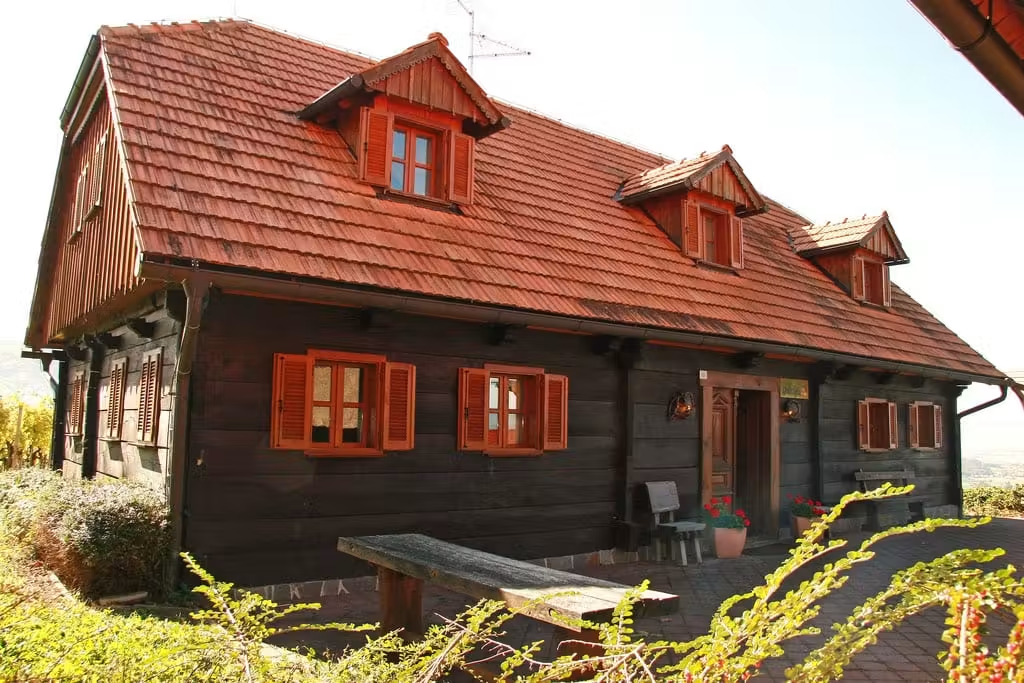
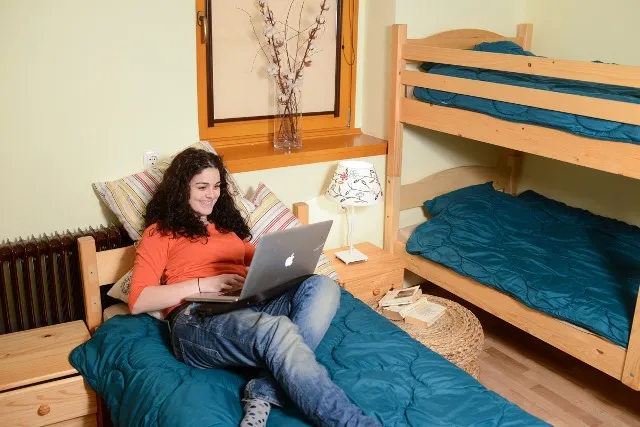
If you want more independence, look at apartments and private rooms in the surrounding villages, and for a more authentic contact with the landscape choose tourist farms and B&B.
The deciding factor when choosing is the distance from the spa you intend to visit. Accommodation in a neighbouring village is often cheaper but harder to reach without a car.
When to visit?
The advantage of the area is that the bulk of the programme is under cover, so a visit is not tied to the season. In winter, water and the sauna are to the fore, and outside the holidays it is also quieter in the spas.
Choose spring and early summer for cycling and castles, and September and October for the grape harvest and the wine roads. Then the plain is at its loveliest and the wine hills are full of activity.
In the middle of summer the water parks are busiest, and the Pannonian heat can be pronounced. If you dislike crowds, choose the smaller spas or plan your visit outside the school holidays.